Knee pain is one of those aches people manage around for months — modifying their stairs, skipping the run, choosing the closer parking spot. Treating the knee directly helps sometimes, but the answer often lives a joint or two higher up.
Knee pain shows up on a lot of people's radar as something they just manage around — modifying how they take stairs, skipping the run they had planned, choosing the closer parking spot because the longer walk is going to cost them later. Most people assume the knee itself is the problem and expect that treating the knee will fix it. Sometimes that is exactly right. But just as often, the knee is absorbing load from somewhere else in the chain — and until that upstream source gets addressed, the knee keeps having the same conversation.
The knee as a middle manager
The knee is a hinge joint built primarily for flexion and extension. Unlike the hip above it or the ankle below it, it does not have a lot of built-in rotational capacity — it depends entirely on the joints on either side to handle twisting and side-to-side loading. When the hip is not rotating freely, or when the foot is not absorbing impact evenly, the knee absorbs what its neighbors cannot. It is not that the knee is fragile; it is that the knee is a middle manager, fielding demands from above and below that should never have been its responsibility in the first place.
What the hip and pelvis contribute
The gluteal muscles — the hip extensors and external rotators — are designed to control how the femur tracks during every step, squat, stair climb, and landing. When they are underactive from prolonged sitting, injury, or simply disuse, the femur tends to rotate inward slightly with each movement. That changes the angle at which the kneecap travels in its groove, creating uneven pressure across the joint surface. This is one of the most common drivers of the aching under or around the kneecap that many active people know well — sometimes called runner's knee or patellofemoral pain. Restore hip mechanics and the kneecap tracking often normalizes. A restricted sacroiliac joint or a stiff lumbar segment can limit hip extension just enough to shift load forward into the knee without causing obvious low back pain, so the connection is easy to miss if nobody looks for it.
The lumbar spine's quiet contribution
The nerves that supply sensation to the knee exit through the lumbar spine, primarily from the L3 and L4 levels. When a joint in the lower lumbar region is restricted or irritated, it can refer discomfort into the front of the knee or the inner thigh without any structural problem at the knee itself. This is less common as the sole explanation, but it frequently plays a contributing role — particularly when knee pain is diffuse, difficult to localize precisely, or does not match a recognizable injury pattern. Any time knee symptoms do not respond predictably to direct local treatment, a lumbar spine evaluation is worth including. Treating only where it hurts misses the driver upstream.
How we approach knee pain
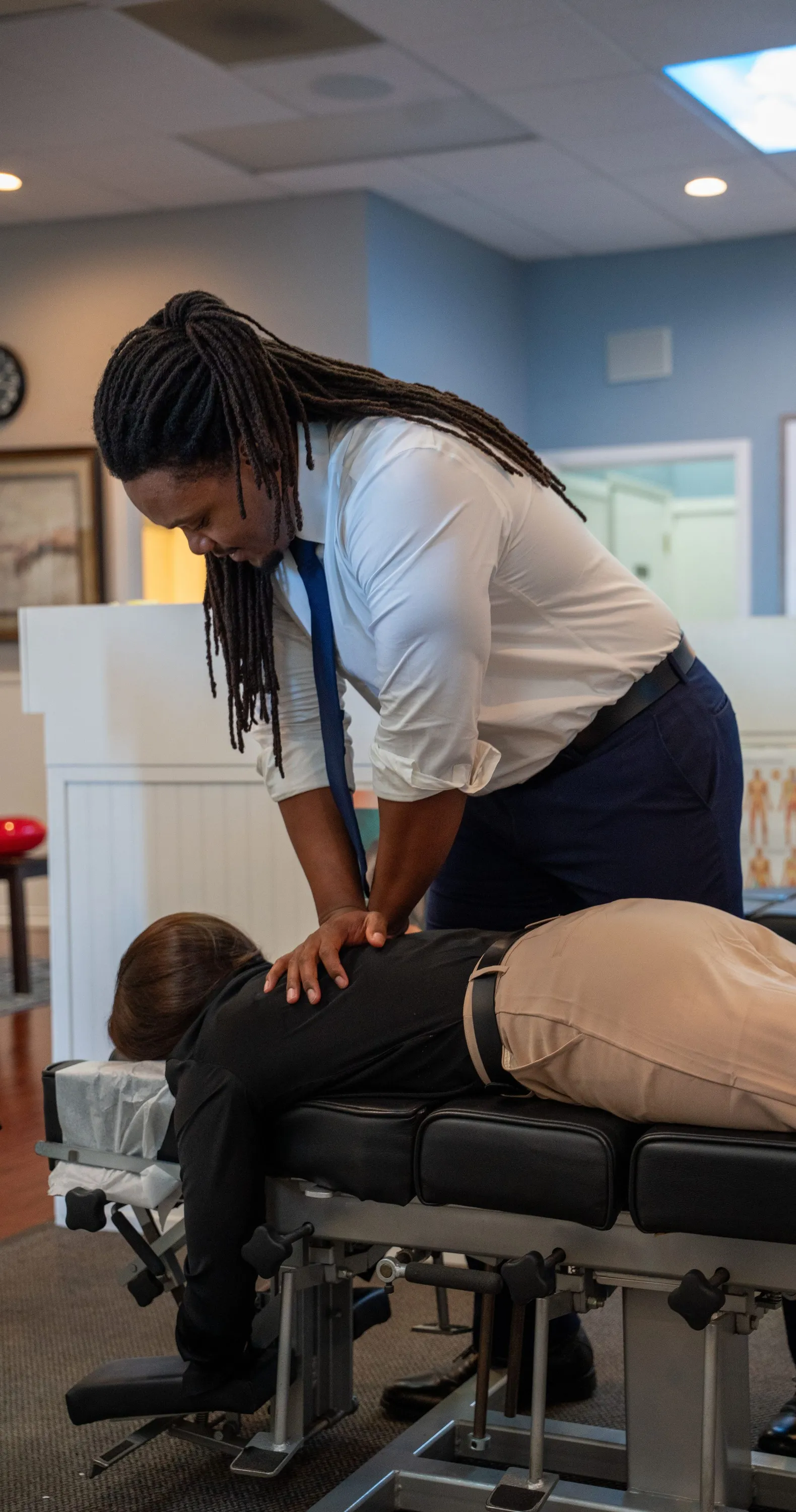
A thorough evaluation looks at the whole picture: how your lumbar spine and pelvis are moving, whether your hip muscles are doing their share of the work, how your foot is loading through each stride, and what is actually happening at the knee joint itself. In some cases the knee needs direct attention — soft tissue work, joint mobilization, or StemWave acoustic wave therapy for tendon involvement that has been building quietly. In most cases, restoring mechanics upstream is what makes the difference between a knee that keeps flaring and one that finally settles down. If you have been dealing with knee pain that does not have a clear explanation, or that keeps returning after it seems to calm down, we would be glad to take a look. Call us at (408) 703-8498 to schedule a consultation at our San Jose office. Knee pain usually has a clear answer — finding it is the most direct path to getting past it.