What's happening
Understanding carpal tunnel syndrome
Carpal tunnel happens when the median nerve is compressed at the wrist, but the irritation can also originate higher up in the neck and shoulder.
How chiropractic care helps
- Drug-free, non-surgical relief
- Less tingling and numbness in the hand
- Improved grip strength
- Care for the whole nerve pathway
- Better sleep without night-time symptoms
- Ergonomic guidance to prevent flare-ups
Why your hand tingles
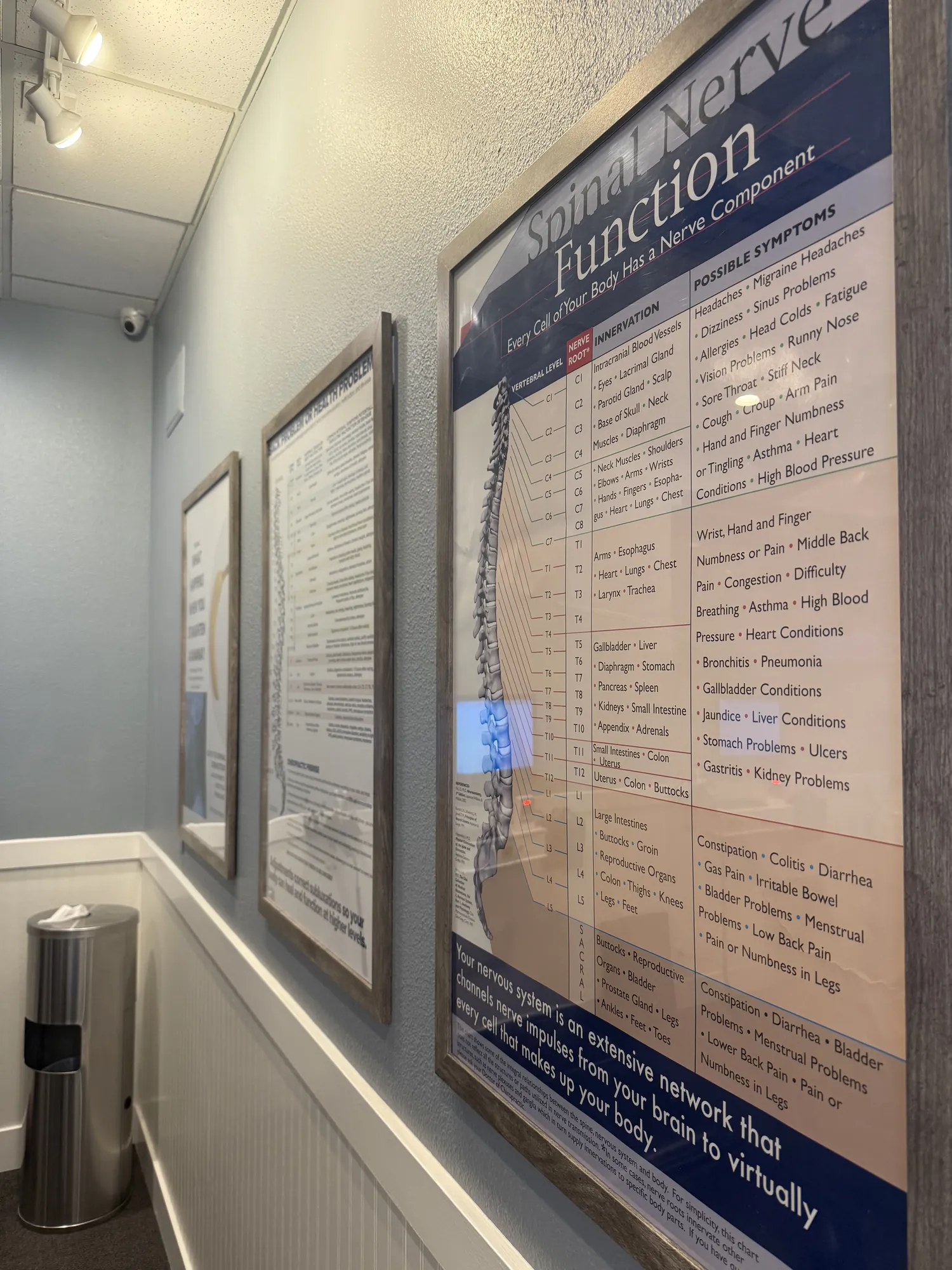
Carpal tunnel symptoms come from pressure on the median nerve, but that nerve travels all the way from your neck to your fingertips. Irritation anywhere along the route, the neck, shoulder, forearm, or wrist, can produce the tingling, numbness, and weakness, which is why treating only the wrist sometimes falls short.

How we treat carpal tunnel
We assess and treat the full nerve pathway, using gentle adjustments and soft-tissue work to relieve compression at the wrist and anywhere else it's being pinched. The goal is to restore comfortable hand function without surgery.

Keeping symptoms away
We pair care with practical ergonomic and stretching guidance for your desk, keyboard, and daily tasks, so the repetitive strain that started the problem doesn't keep feeding it.
Why it happens
Common causes of carpal tunnel syndrome
What you might feel
Signs we commonly see
- Tingling or numbness in the fingers
- Weak grip or dropping objects
- Pain that worsens at night
- Symptoms after typing or repetitive work
How it works
What to expect
Consultation & exam
We listen to your history and assess how your body moves to pinpoint the real source of the problem.
Report of findings
We explain what we found and what care looks like, in plain language, with no surprises.
Targeted adjustments
Gentle, precise care to restore motion, ease nerve pressure, and release tight muscles.
Ergonomics & prevention
Workstation, wrist-posture, and stretching guidance so symptoms don't return.
Frequently asked
Common questions about carpal tunnel syndrome
Can chiropractic help carpal tunnel?
+
Often, yes, particularly when the nerve is being irritated along its path from the neck to the wrist. Conservative care is a reasonable first step before considering surgery.
Can I avoid surgery?
+
Many mild-to-moderate cases improve with conservative care and ergonomic changes. We'll be honest if your case looks like it needs a surgical opinion.
Why is it worse at night?
+
Wrist position during sleep often increases pressure on the nerve. Addressing the compression and using simple supports can ease night-time symptoms.
Is the care gentle on my wrist?
+
Yes. We use gentle techniques and focus on relieving pressure, not aggravating an already irritated nerve.
How long until I notice a change?
+
Many patients feel improvement within a few weeks. We'll set realistic expectations based on your exam.