What's happening
Understanding herniated disc
A herniated disc occurs when the soft center of a spinal disc pushes out and presses on nearby nerves, causing pain, numbness, or weakness.
How chiropractic care helps
- Non-surgical relief from disc pain
- Pressure taken off the affected nerve
- Less radiating pain, numbness, and tingling
- Gentle decompression-based care
- Support for the disc's natural healing
- Guidance to protect your spine long-term

What a herniated disc is
Spinal discs are cushions between your vertebrae with a tough outer ring and a soft center. When the center pushes through a weakened spot in the ring, it can press on a nearby nerve, sending pain, numbness, or weakness down an arm or leg, often far from the disc itself.
How we treat herniated discs
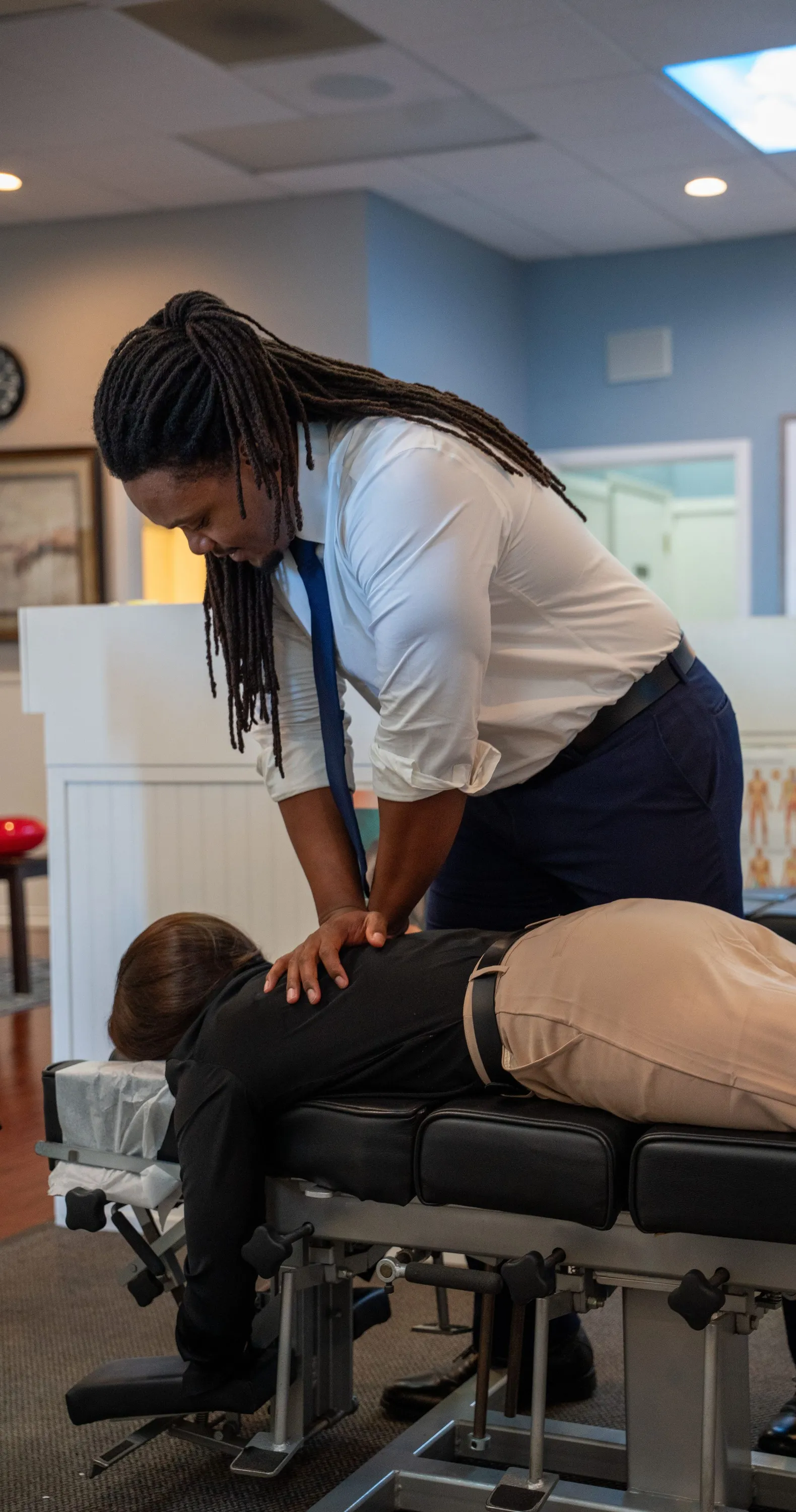
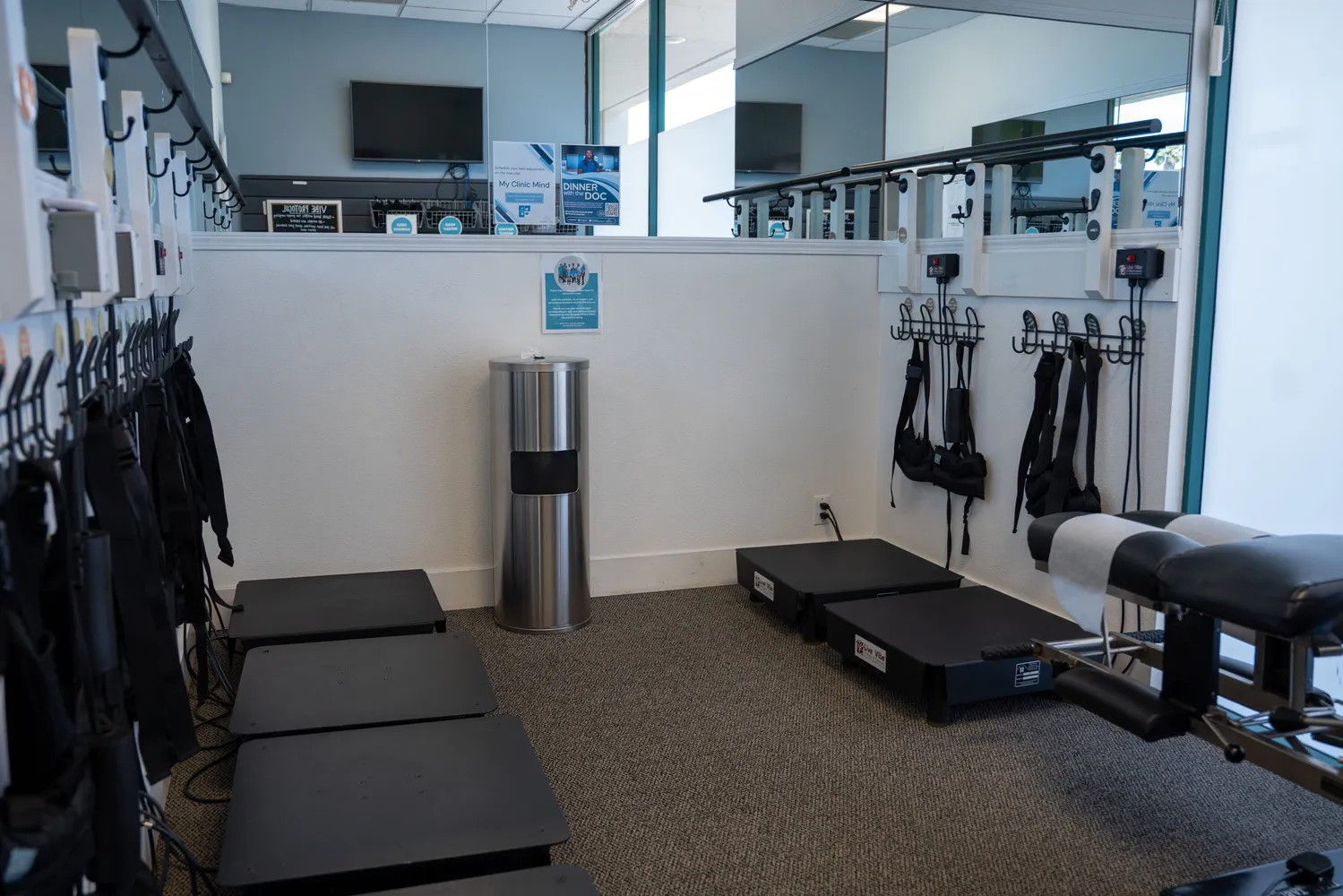
We use gentle spinal decompression and targeted, low-force adjustments to take pressure off the disc and the irritated nerve. Reducing that compression eases the radiating symptoms and gives the disc a better environment to heal, often without surgery.
Protecting your spine
As symptoms settle, we add core strengthening and movement guidance to support the spine and reduce the load on the disc, lowering the chance of another flare. If your case needs imaging or a specialist, we'll guide you there.
Why it happens
Common causes of herniated disc
What you might feel
Signs we commonly see
- Radiating pain into an arm or leg
- Numbness or tingling
- Muscle weakness
- Pain that worsens with certain positions
How it works
What to expect
Consultation & exam
We listen to your history and assess how your body moves to pinpoint the real source of the problem.
Report of findings
We explain what we found and what care looks like, in plain language, with no surprises.
Targeted adjustments
Gentle, precise care to restore motion, ease nerve pressure, and release tight muscles.
Decompress & strengthen
Gentle decompression plus core and movement guidance to support the disc and prevent flares.
Frequently asked
Common questions about herniated disc
Can chiropractic help a herniated disc?
+
Many herniated discs respond well to conservative, decompression-based care that relieves pressure on the nerve. We screen carefully and refer for imaging or a surgical opinion when it's warranted.
Will I need surgery?
+
Most disc herniations improve without surgery. We start conservatively and are honest if your situation calls for more.
Is the adjustment safe with a disc issue?
+
Yes, when done appropriately. We use gentle, low-force techniques and decompression rather than forceful rotation.
Why does the pain travel into my leg or arm?
+
The herniated disc presses on a nerve root, so symptoms show up along that nerve's path, sometimes far from the disc itself.
How long does recovery take?
+
It varies. Many patients improve over several weeks of consistent care; we'll set realistic expectations after assessing you.