What's happening
Understanding vertigo & dizziness
Vertigo, that unsettling sense that the room is spinning, is frequently linked to dysfunction in the upper neck and the way it communicates with your balance system.
How chiropractic care helps
- Fewer and less severe episodes
- Better balance and steadiness
- Drug-free, gentle approach
- Care for cervicogenic dizziness
- Less nausea tied to dizziness
- Reassurance and a clear plan

Why the room spins
Your sense of balance relies on signals from your inner ear, your eyes, and the joints at the top of your neck. When that upper-cervical input is disrupted, by restriction, tension, or an old injury, the signals don't agree, and your brain interprets the mismatch as spinning or unsteadiness.

How we help with vertigo
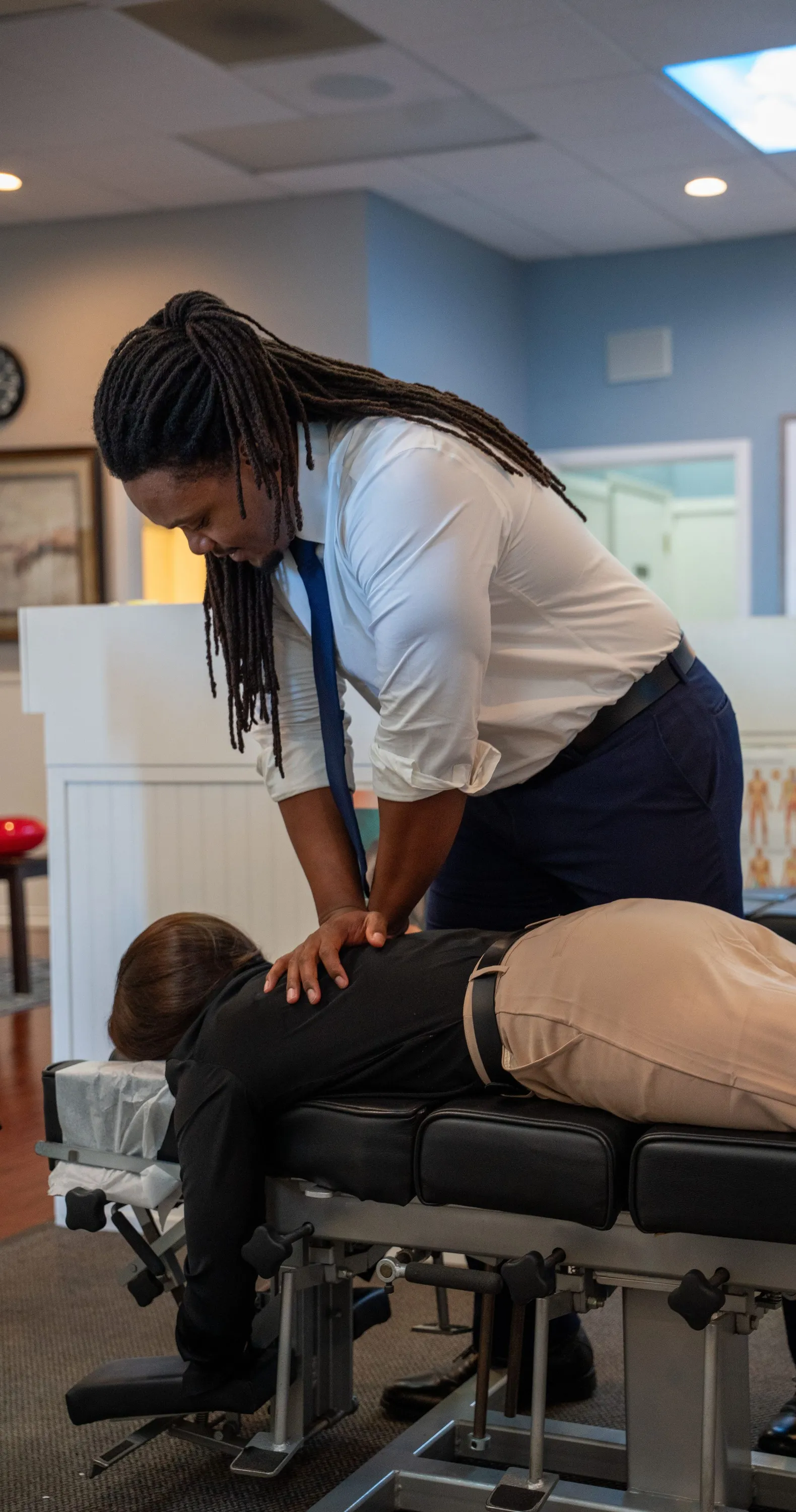
We carefully assess the upper neck and balance system, then use gentle upper-cervical adjustments and, where appropriate, specific repositioning techniques to restore proper signaling. The aim is fewer episodes that hit less hard.
Finding steady ground
As things settle, we add simple balance and posture work to support steady, confident movement, and we'll always coordinate with your physician when your dizziness needs a broader medical look.
Why it happens
Common causes of vertigo & dizziness
What you might feel
Signs we commonly see
- Spinning sensation when you move your head
- Loss of balance or unsteadiness
- Nausea with dizziness
- Symptoms triggered by lying down
How it works
What to expect
Consultation & exam
We listen to your history and assess how your body moves to pinpoint the real source of the problem.
Report of findings
We explain what we found and what care looks like, in plain language, with no surprises.
Targeted adjustments
Gentle, precise care to restore motion, ease nerve pressure, and release tight muscles.
Reassess & support
We retest balance and add posture and balance guidance to keep episodes at bay.
Frequently asked
Common questions about vertigo & dizziness
Can chiropractic help vertigo?
+
For vertigo with a neck-related (cervicogenic) component, gentle upper-cervical care can help. For certain inner-ear causes, specific repositioning techniques are effective. We assess to find which applies to you.
Is the adjustment safe if I'm dizzy?
+
Yes. We use gentle, low-force techniques and screen carefully, especially with the upper neck and balance system.
What is BPPV?
+
BPPV is a common inner-ear cause of vertigo from displaced crystals. It often responds to specific repositioning maneuvers, which we can perform or refer for.
When should I see a doctor instead?
+
Dizziness can have many causes. If yours is severe, sudden, or comes with other neurological symptoms, we'll make sure you're evaluated medically.
How many visits will I need?
+
Many patients improve within a handful of visits, depending on the cause. We'll give you a realistic plan after assessing you.