What's happening
Understanding shoulder pain
Shoulder pain can stem from the joint itself, the surrounding muscles, or referred tension from the neck and upper back. It often limits everyday movements like reaching overhead or behind you.
How chiropractic care helps
- Drug-free relief from shoulder pain
- Better reach and range of motion
- Easier sleep on the affected side
- Care that includes the neck and upper back
- Support for rotator-cuff and overuse strain
- Guidance to prevent re-injury
Why your shoulder hurts
The shoulder is the most mobile joint in your body, which also makes it one of the easiest to overload. Pain here can come from the rotator cuff, the joint itself, or tension referred down from the neck and upper back, so chasing only the sore spot often misses the real driver.

How we treat shoulder pain
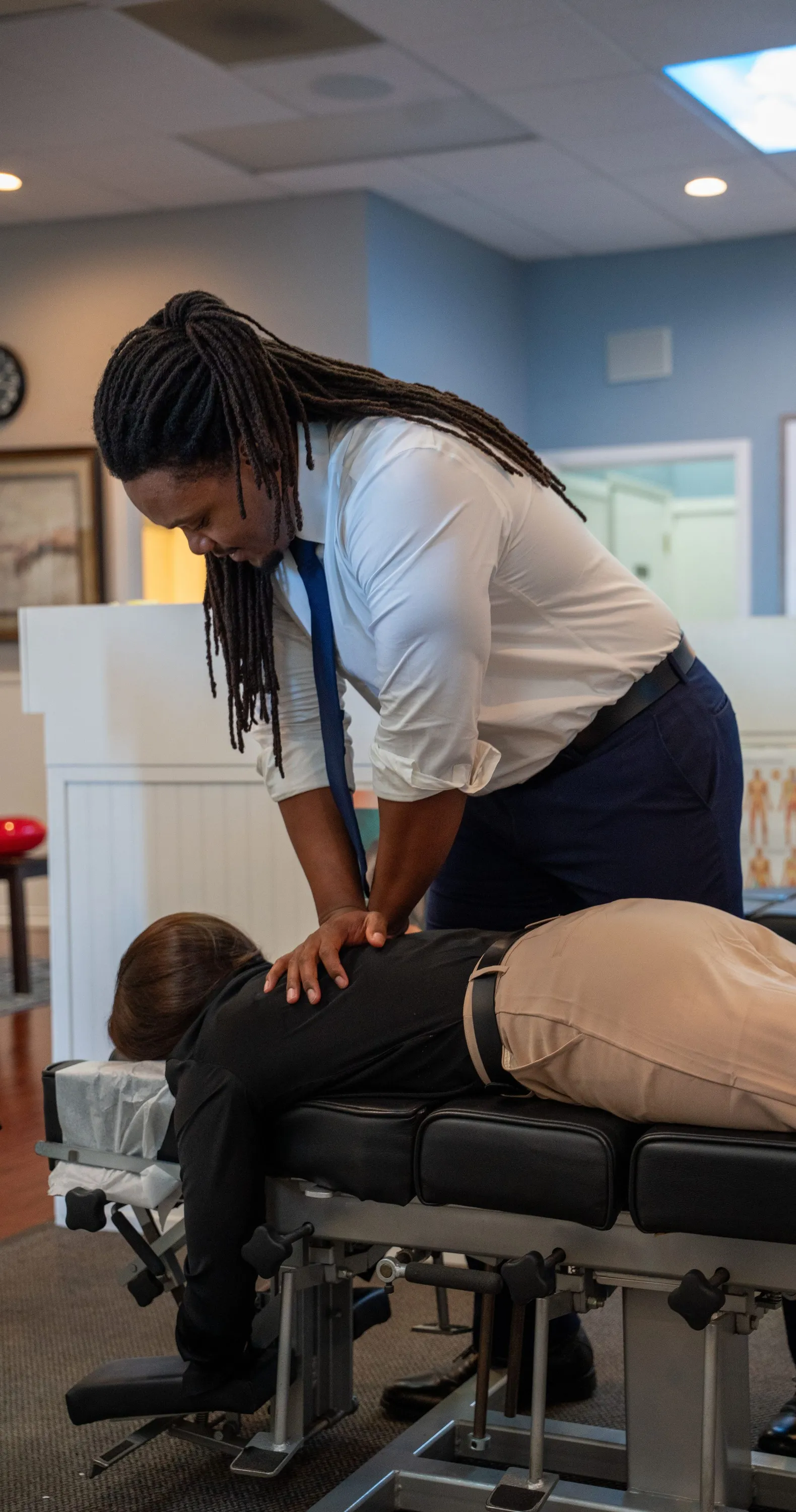
We assess the shoulder together with the neck and upper spine, then use adjustments and soft-tissue therapy to restore motion and take strain off the joint. Addressing the whole region is what gets reaching and lifting comfortable again.
Back to full motion
We finish with mobility and strengthening guidance for the shoulder and upper back so you can reach overhead, sleep on your side, and carry on with daily life without the wince.
Why it happens
Common causes of shoulder pain
What you might feel
Signs we commonly see
- Pain when reaching overhead
- Trouble sleeping on the affected side
- Weakness or limited range of motion
- Clicking or grinding in the joint
How it works
What to expect
Consultation & exam
We listen to your history and assess how your body moves to pinpoint the real source of the problem.
Report of findings
We explain what we found and what care looks like, in plain language, with no surprises.
Targeted adjustments
Gentle, precise care to restore motion, ease nerve pressure, and release tight muscles.
Strengthen & prevent
Movement, posture, and habit guidance so the relief holds and the problem stays gone.
Frequently asked
Common questions about shoulder pain
Can a chiropractor help shoulder pain?
+
Often, yes, especially when the pain is driven by joint restriction, posture, or tension referred from the neck. We assess the whole region to find the real cause.
Is my shoulder pain coming from my neck?
+
Frequently. Neck and upper-back tension commonly refers pain into the shoulder, which is why we always check there too.
Can you help frozen shoulder?
+
We can support frozen-shoulder recovery with gentle mobility work and adjustments. It takes patience, but careful care helps restore motion over time.
Will I need to stop using my arm?
+
Rarely. We'll tell you what to modify and what to keep doing, total rest usually isn't the answer.
How long until it improves?
+
It depends on the cause. Many patients feel progress within a few visits; we'll give you a realistic timeline after your exam.