School season means new backpacks, long hours at desks, and growing spines absorbing more load than they should. A few simple habits can make a big difference before the school year sets in.
The end of summer has a way of sneaking up on families. One week you are at the pool; the next you are hunting down composition notebooks and trying to figure out if last year's backpack still fits. It is easy to focus on supplies and schedules while missing something that quietly affects how your child feels all year: the load their spine is about to carry, literally and every single school day.
What a packed backpack actually does to a developing spine
A full school backpack often weighs between 15 and 25 pounds by the time you factor in a Chromebook, textbooks, a water bottle, and a lunch. Children's spines are still developing, and that kind of sustained load — worn the wrong way, five days a week — creates real mechanical stress. A heavy bag carried on one shoulder tilts the spine sideways. One that hangs too low pulls the lower back into extension and shifts the center of gravity backward, forcing the child to hunch forward just to compensate. Over weeks and months, that posture starts to feel normal. The spine adapts to what it is asked to hold.
Signs that the load is becoming a problem
Kids do not always say 'my back hurts' — they shrug, they slump, they complain that they are tired by mid-afternoon. Look for the backpack visibly pulling their shoulders back or down, a forward head lean that was not there before, or complaints of neck tightness and headaches by the end of the week. Soreness after a long school day that fades on weekends and returns on Monday is a pattern worth paying attention to. It is not just growing pains — it is the spine telling you something about the load it is managing.
Practical rules that actually help
Pediatric health guidelines suggest keeping a loaded backpack under 10 to 15 percent of a child's body weight — so for a 70-pound child, that is no more than 7 to 10 pounds. Both shoulder straps should be worn every time (a single-strap bag shifts the entire load to one side of the spine). Chest and hip straps, when available, distribute weight to the core and hips rather than stacking it on the shoulders and neck. Pack heavier items closest to the back so the load rides high and close rather than pulling away. And if the school allows locker use, encourage it — there is no reason to haul everything at once.
A quick check before the year gets going
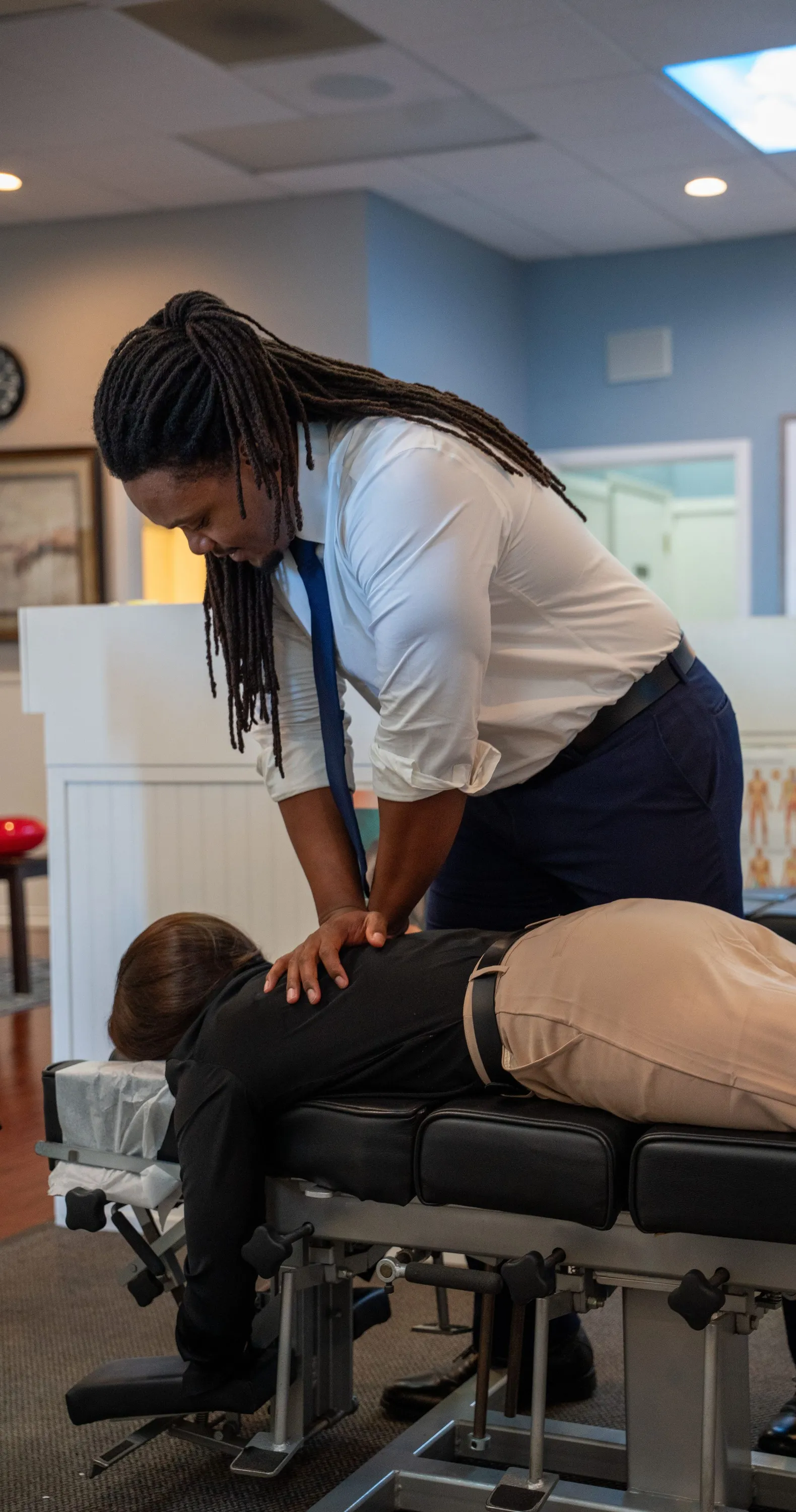
A chiropractic evaluation at the start of the school year is a straightforward way to see where your child's spine actually stands before the academic grind begins. We will look at how their neck, mid-back, and lower back are moving, catch any restrictions that have already built up over the summer, and talk through posture habits that make the whole year easier. Kids respond well to chiropractic care — their spines are still developing and tend to make changes quickly. If you would like to schedule a checkup for your child or any member of your family before fall, give us a call at (408) 703-8498. Our San Jose office would love to help your family start the school year on solid footing.