Hip pain can stop you mid-stride and quietly reshape the way your whole body moves. But the hip is rarely the only thing involved — and treating it in isolation is often why it keeps coming back.
Hip pain has a way of taking over. Once it sets in, it quietly rewires how you walk, how you carry your weight when you stand, even how you sleep at night. Many people push through it for weeks before realizing they have gradually changed almost everything about how they move — compensating without meaning to, loading one side more than the other, and wondering why new aches keep appearing in places that were never a problem before. That cascade is worth paying attention to, because hip pain almost always has more going on beneath the surface than the hip alone.
Why the hip is harder to assess than it looks
The hip is a deep ball-and-socket joint built to carry substantial load through a wide range of directions. But it sits at the intersection of some of the most important force-sharing relationships in the body — the lumbar spine above it, the sacroiliac joints directly behind it, and the knee below it. When any one of those relationships breaks down, the hip tends to absorb the extra stress. That is why the same hip pain can trace back to a restricted lumbar joint in one person, underused gluteal muscles in another, and a tight iliotibial band in a third. The symptom looks the same; the driver behind it is different every time.
The spine connection most people miss
The nerves that supply the hip and upper leg exit the lumbar spine through the lower vertebrae — which means a restricted or irritated joint in the low back can generate hip pain, groin aching, or referred discomfort down the thigh without any structural problem in the hip joint itself. This is more common than most people expect. It also explains why people sometimes go through hip imaging or receive hip-specific diagnoses without finding a clear structural cause. And it explains why treating only the hip often falls short: if the lumbar spine or pelvis is quietly contributing, the hip never fully settles down no matter how much attention it receives on its own.
Patterns we see regularly in our San Jose office
The hip complaints we evaluate most often fall into a few recognizable groups. Deep groin or front-of-hip pain that worsens with prolonged sitting frequently involves restriction in the lumbar and sacroiliac joints, amplified by hip flexors chronically shortened from hours at a desk. Outer hip pain — the kind that aches when you lie on your side at night or stand for extended periods — often points to gluteal tendon irritation combined with poor load distribution from the spine and pelvis. And pain that arrived after an injury — a fall, a misstep on the trail, a collision in a sport — typically involves several structures that absorbed force together, not just the hip joint on its own.
Getting to the actual answer
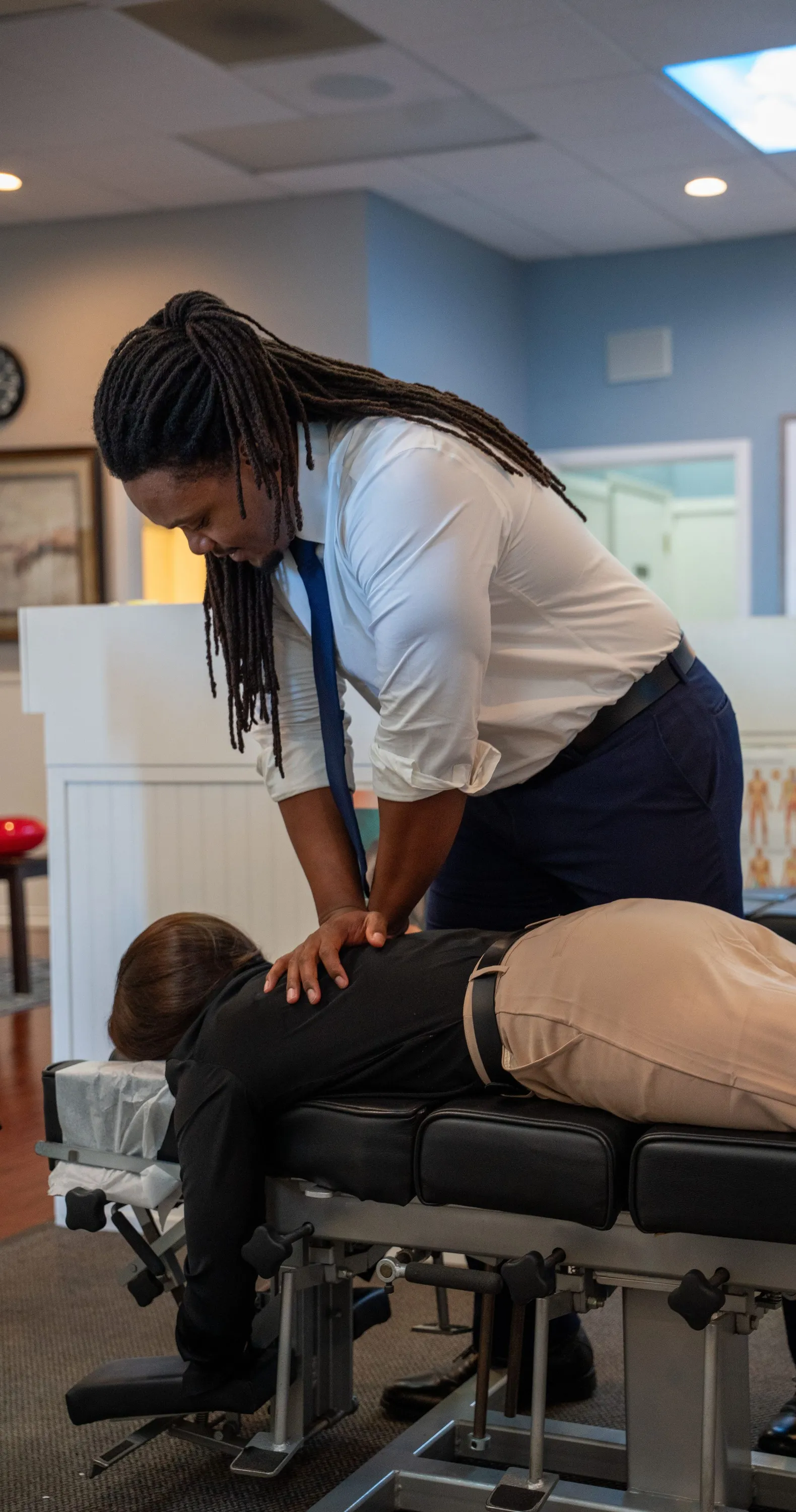
A thorough evaluation looks at how your lumbar spine, pelvis, sacroiliac joints, and hip are moving together — not just where the pain is loudest. When we can see which joints are restricted and which muscles have stopped doing their share of the work, we have a real starting point rather than a guess. Chiropractic care focuses on restoring normal joint motion, reducing the compensatory tension that builds around restricted areas, and helping your body move through the hip the way it was designed to. If you have been dealing with hip pain for more than a few weeks, or if it keeps returning after it seems to calm down, we would love to take a closer look. Call us at (408) 703-8498 to schedule a consultation at our San Jose office — hip pain usually has a clear explanation, and finding it is the most direct path forward.