Pickleball's low-impact reputation is real — but it doesn't mean injury-proof. Here's what the sport actually does to your joints, and how chiropractic care keeps you on the court.
Pickleball is the fastest-growing sport in the country, and San Jose has embraced it wholeheartedly. Courts that used to sit empty on weekends are packed by eight in the morning, with players of every age discovering just how fun the game is. They are also, unfortunately, discovering what happens when you dive for a drop shot after a week spent mostly at your desk.
What pickleball actually asks of your body
The sport has a low-impact reputation compared to running or basketball, and that is fair — but do not let it set your guard down. Pickleball combines quick lateral cuts, explosive overhead swings, and the kind of sudden deceleration that taxes every joint from the ankle to the shoulder. The four complaints we see most often are shoulder strains from overhead smashes, elbow tendinopathy similar to tennis elbow, low back pain from repeated twisting and lunging, and knee soreness from the fast stop-and-start movement the game demands. None of those are trivial, and all of them are patterns we see regularly.
The weekend warrior gap
A lot of pickleball players are not traditional athletes. They sit at a desk most of the week and then compete hard for two hours on Saturday morning. That gap between how the body moves Monday through Friday and what the court demands on the weekend is exactly where injuries live. Tight hip flexors, a stiff mid-back, and underprepared rotator cuffs are invisible until you suddenly need them. The injury does not happen because pickleball is dangerous — it happens because the body was not quite ready for the load.
How chiropractic care fits into the picture
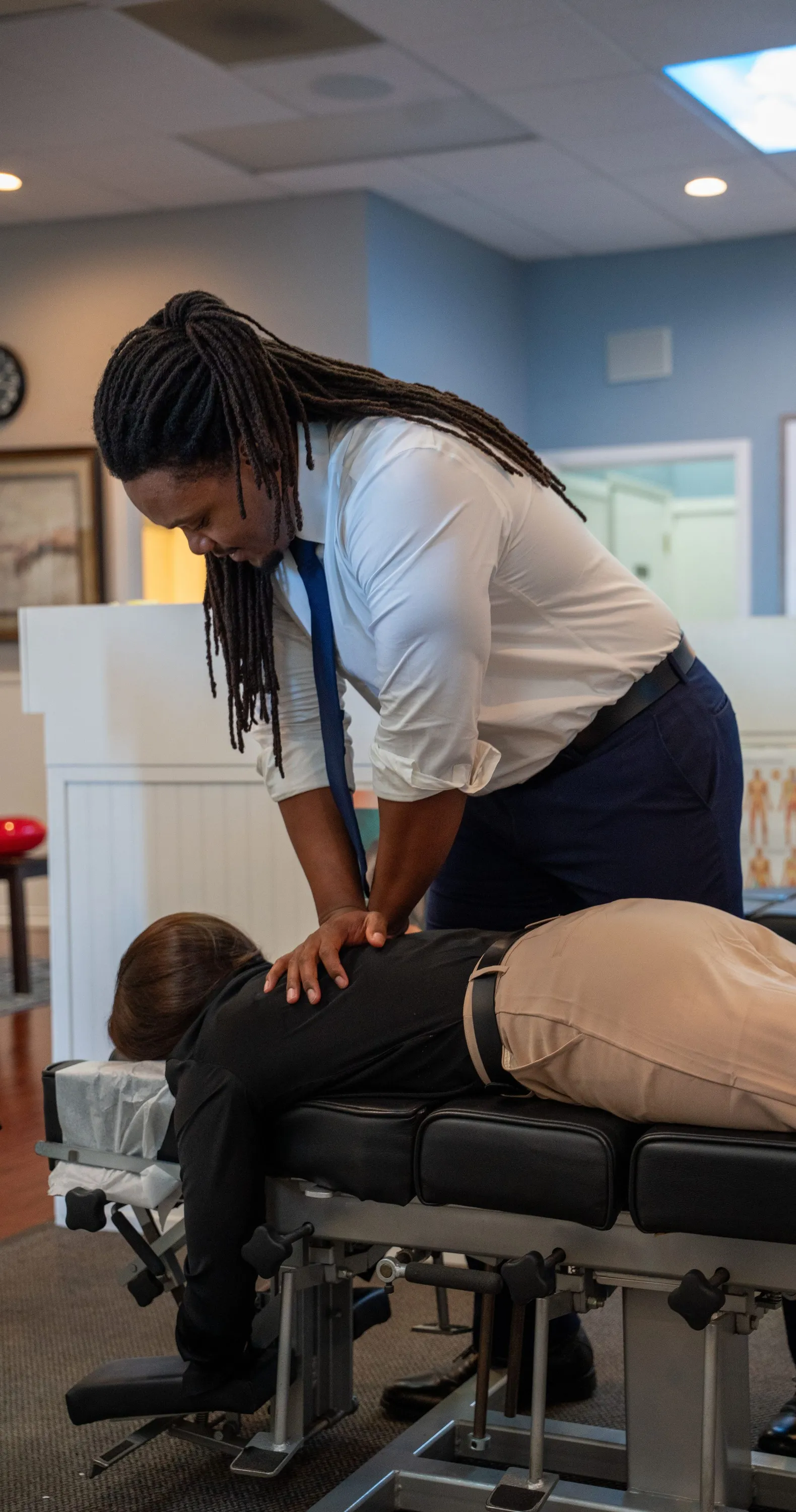
When something does go wrong, chiropractic care looks at the mechanics that set the injury up rather than just managing pain. If your low back is absorbing extra strain, we check whether your hips are rotating as freely as they should — because when they are not, the spine picks up the slack. If your shoulder keeps getting cranky, we look at how your thoracic spine is moving, since stiffness there forces the shoulder to overwork on every swing. Many players also come in proactively so that small restrictions get cleared before they become the thing that sidelines them for a month.
Getting back on the court — and staying there
Whether you are dealing with a nagging ache now or simply want to make sure your body can keep pace with your game, we would love to take a look. A thorough evaluation shows us what your spine and joints are actually doing and gives us a concrete starting point. Call us at (408) 703-8498 to schedule a consultation at our San Jose office. The court will be there when you are ready — let's make sure your body is too.