Shoulder pain is one of the most common complaints we see in our San Jose office, and also one of the most misunderstood. The shoulder itself is rarely the whole story.
Shoulder pain has a way of becoming background noise. It starts as a minor ache when you reach overhead or a catch when you swing your arm back, and before long you are unconsciously avoiding certain movements without even realizing it. For some people it builds gradually from years of desk work and forward posture. For others it arrives suddenly after a swim workout, a round of golf, or an afternoon of painting the garage ceiling. Either way, the shoulder is rarely the whole story — and treating it as an isolated problem is one reason shoulder pain so often keeps coming back.
Why the shoulder is so prone to problems
The shoulder joint has the widest range of motion in the human body, which is exactly what makes it susceptible to so many different things going wrong. Unlike the hip, it is held together primarily by muscles and soft tissue rather than deep bony structure. Every movement depends on those structures working in balance. When one muscle group gets tight or overworked and another weakens, the mechanics shift. The head of the upper arm bone no longer tracks cleanly in the socket. Soft tissue gets pinched where it should not be. Inflammation develops, and what began as a mechanical imbalance becomes a painful one — sometimes over months, sometimes all at once.
The connection between your shoulder, neck, and mid-back
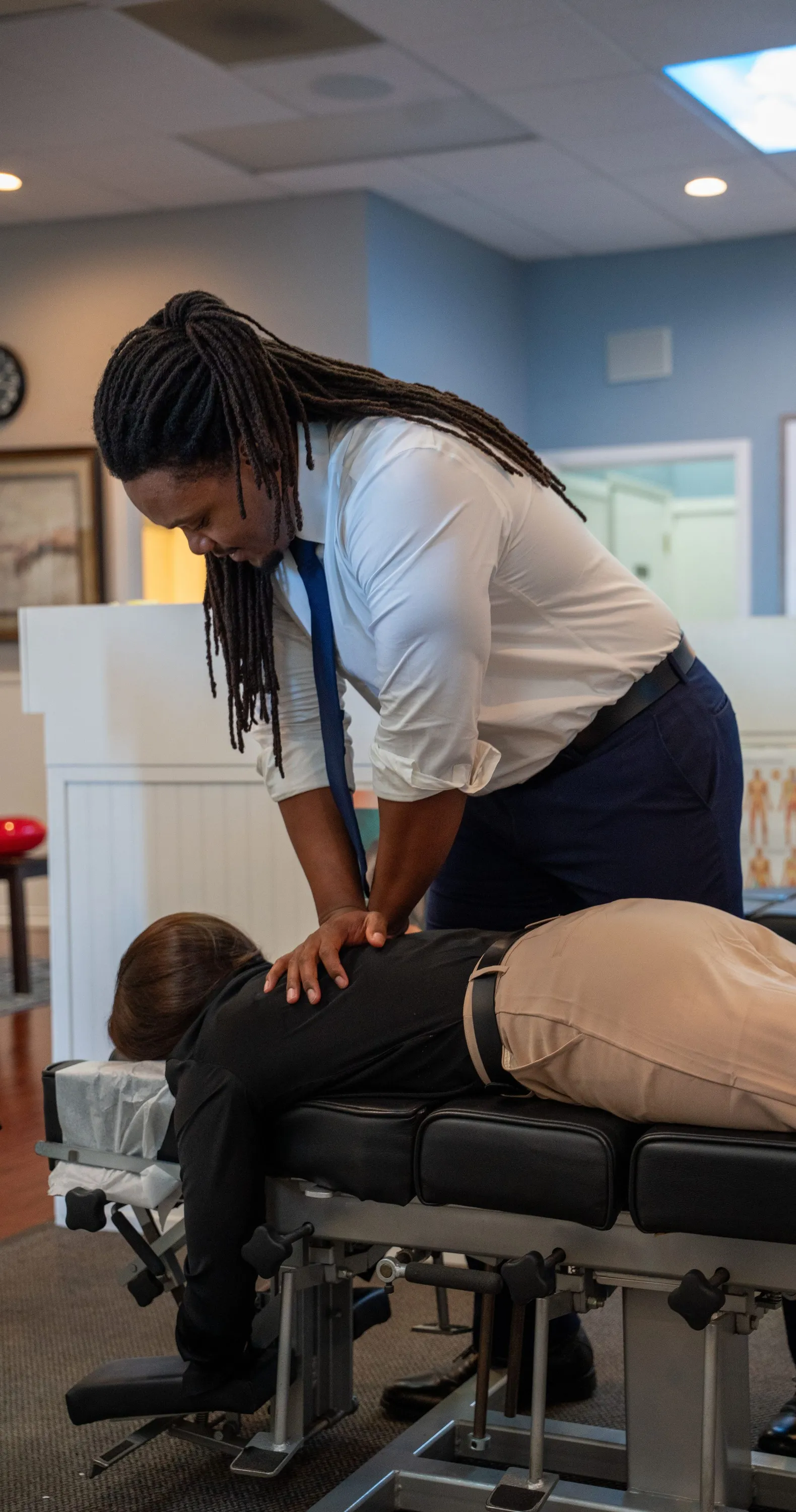
What surprises many patients is how often shoulder pain traces back to the cervical spine and thoracic spine. The nerves that control shoulder and arm function exit through the neck, so when a joint in the upper cervical spine loses normal motion, it can refer irritation directly into the shoulder. A stiff mid-back creates its own problem: it limits how freely the shoulder blade can move, and when the blade is restricted, the rotator cuff has to compensate on every single arm movement. What looks and feels like a pure shoulder problem is frequently a shoulder problem sitting on top of a spine problem. Treating only one of them rarely gives you the full picture.
Patterns we see regularly in our San Jose office
Most of the shoulder complaints we evaluate fall into a few recognizable categories. Rotator cuff strain is common in anyone who works overhead repeatedly — painters, swimmers, warehouse workers, and people who reach into high shelves day after day. Shoulder impingement, where the tendons get pinched during certain arm movements, shows up frequently in people who sit with a rounded upper back for hours; the posture gradually narrows the space the tendons move through. Bicep tendon irritation follows similar mechanics. In each case, the underlying cause is some combination of muscle imbalance, restricted spinal joints, and movement patterns that have loaded the same structures past their tolerance over time.
Getting an honest answer and a place to start
If your shoulder has been bothering you for more than a few weeks, or if it keeps returning after it seems to settle down, it is worth getting a thorough evaluation before the pattern becomes harder to unwind. We will look at how your shoulder, neck, and mid-back are moving together, identify what is driving the restriction or irritation, and give you an honest read on what care is likely to help. To schedule a consultation at our San Jose office, call us at (408) 703-8498. You do not have to keep guessing at a problem that has a clear explanation.