If you have been dealing with persistent pain that rest and stretching just have not fixed, StemWave acoustic wave therapy may be the missing piece — and it is available right here in our San Jose office.
There is a particular kind of frustration that comes with pain that simply refuses to go away. You rest it, stretch it, ice it, and give it time — and it settles just enough that you think it is finally on its way out, only to flare back up the moment you ask your body to do something normal. Plantar fasciitis that greets you every morning before your feet hit the floor. Elbow tendinopathy that limits your grip six months after it started. A shoulder that aches through every night's sleep. These are not hopeless situations, but they often do need something more than what conventional rest and stretching alone can provide. StemWave therapy is one of the tools we reach for in exactly these cases.
What StemWave actually does
StemWave uses focused acoustic waves — controlled pulses of sound energy — delivered directly to the area of pain or injury. When those waves reach tissue, they create a controlled mechanical stimulus that encourages your body's own healing processes to become more active. In practical terms, this means increased circulation to the area, a signal to the tissue to begin repair activity, and a reduction in the local inflammation that has been keeping things stuck. The name comes from the way acoustic wave therapy can stimulate the body's stem cell response in treated tissue, encouraging regeneration rather than just symptom relief. It is non-invasive, requires no needles, and leaves no downtime afterward.
Conditions that tend to respond well
We most commonly use StemWave for tendon and soft tissue conditions that have not responded well to other approaches. Plantar fasciitis is one of the most consistent responders — the heel and arch can be notoriously resistant to treatment, and acoustic wave therapy has a strong track record there. Tennis elbow and golfer's elbow, both forms of lateral and medial epicondylitis, respond well, as does rotator cuff tendinopathy in the shoulder. Knee pain related to patellar tendon irritation, Achilles tendon issues, and chronic hip flexor tension are also conditions we address with StemWave regularly. It is particularly useful when imaging shows tissue-level changes — thickening, calcification, or early degeneration — that have not resolved on their own.
What a session looks like
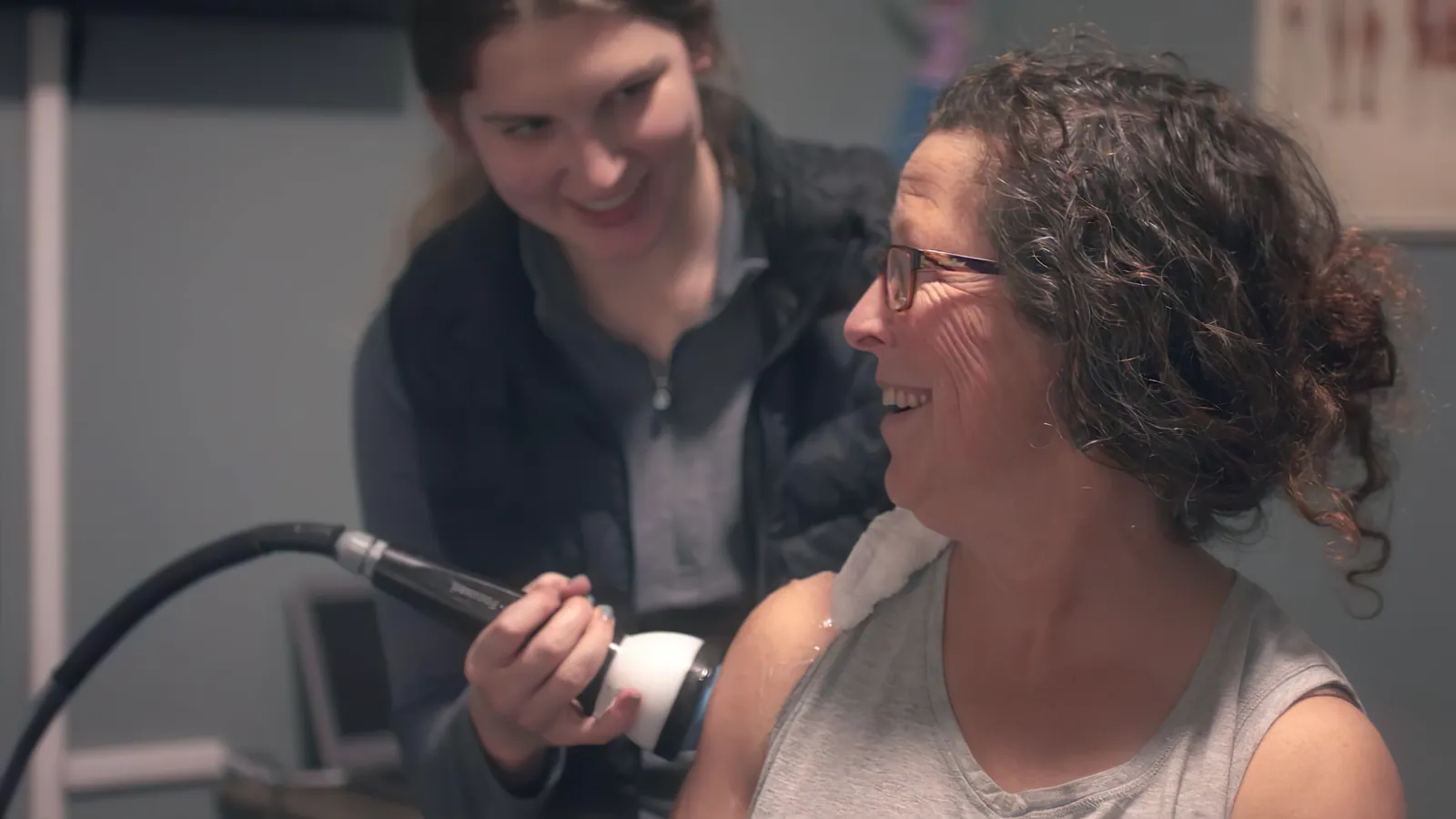
A StemWave session is straightforward and takes about ten to fifteen minutes for the treated area. A handheld applicator is moved across the skin over the region of concern, delivering the acoustic pulses in a pattern that covers the affected tissue. Most patients feel a mild pressure sensation and some temporary discomfort in sensitive spots, which typically settles within a few minutes of finishing. There is no preparation required and no recovery period — most people go directly back to their regular activities. A typical course of care involves several sessions spaced a few days apart, and many patients begin noticing a change in how the area feels after the first two or three visits.
StemWave as part of a complete care plan
StemWave works especially well when it is paired with chiropractic adjustments and movement work, because it addresses the tissue-level problem while chiropractic care restores the joint mechanics that often contribute to why the tissue got overloaded in the first place. If you have been dealing with stubborn tendon pain, chronic heel or elbow issues, or soft tissue soreness that just will not resolve, we would be glad to evaluate whether StemWave makes sense for what you are experiencing. Call us at (408) 703-8498 to schedule a consultation at our San Jose office. We will take a close look at what is going on and put together an honest plan for what is most likely to actually help.