If your neck pain comes with tingling down your arm or a deep stiffness that never quite clears, compression along the cervical spine is often part of the picture. Cervical traction addresses that compression directly — and most people are surprised by how comfortable it feels.
If your neck pain comes with tingling into your arm, a persistent stiff spot that never quite loosens, or the kind of deep aching that gets worse after a long day at a screen, there is a good chance that compression along your cervical spine is contributing. Cervical traction is one of the more effective tools for addressing that compression directly — and most people who try it are surprised by how comfortable the experience actually is.
What Cervical Traction Does
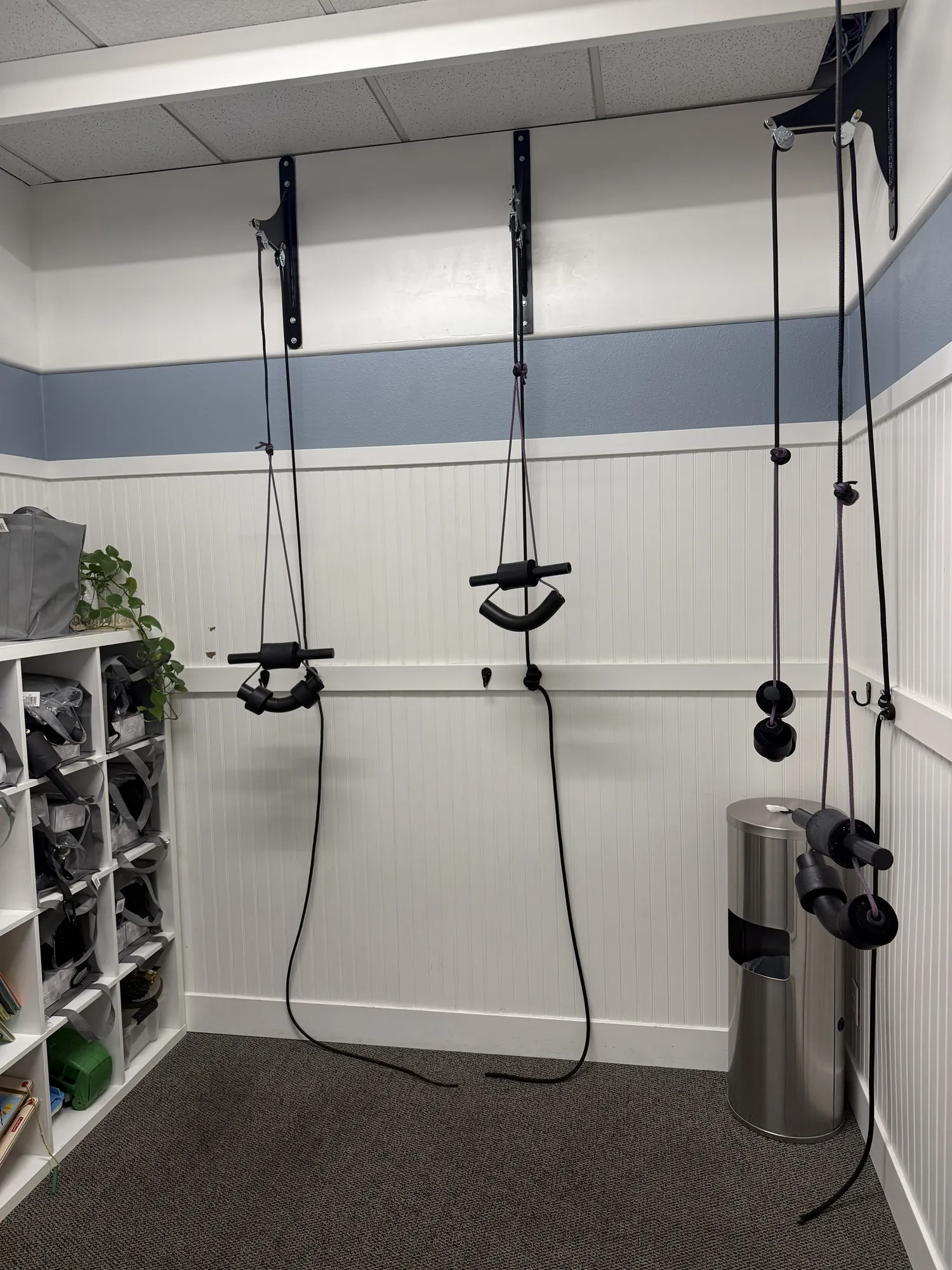
The cervical spine carries the weight of your head — about ten to twelve pounds on a well-balanced neck — and absorbs the stress of every forward nod, screen glance, and hours-long posture. Over time, that load compresses the discs and narrows the spaces where nerve roots exit the spine. Cervical traction gently lengthens the neck, creating space between vertebrae and reducing compressive load on discs and nerve roots. A padded device cradles the base of the skull and draws it gradually away from the shoulders. Most patients describe the sensation as a satisfying release — the opposite of the pressure they have been carrying around all day.
Conditions That Often Respond Well
Cervical traction tends to be most helpful when compression is part of the picture. That includes disc herniations in the neck that are irritating nerve roots and causing symptoms down the arm — numbness, tingling, or weakness anywhere from the upper arm to the fingers. It is also useful for degenerative disc changes that have reduced the space between vertebrae, for facet joint irritation from sustained forward postures, and for the kind of relentless neck tightness that does not clear with massage or stretching alone. We use it as one tool among several, matched to what is actually driving each patient's symptoms.
What to Expect During a Session
A cervical traction session typically takes ten to fifteen minutes, usually as part of a broader appointment. The device positions your head at a specific angle and applies traction gradually, giving your muscles time to relax into it rather than brace against it. Many patients notice that their neck feels lighter and moves more freely once the pressure is released. We adjust the angle, force, and duration based on your symptoms and how you are responding — there is no one-size-fits-all approach.
A Good Starting Point If You Have Not Found Answers
If you have been managing neck pain, arm tingling, or a stubborn stiff spot in your upper neck that does not seem to resolve on its own, it is worth finding out whether cervical compression is part of what is going on. At our San Jose office, we will do a thorough evaluation — looking at how your cervical spine is actually moving and whether disc or nerve involvement is contributing — before recommending any treatment. Call us at (408) 703-8498 to schedule a consultation. You deserve to know what is behind it.